If you’ve ever dealt with closet chaos during a humid summer, you know the struggle: you pull out a sweater, and it’s faintly musty. Or your favorite pair of jeans feels a little stiff and clammy, like it’s been hanging in a bathroom. That’s where open door wardrobes come in—super popular right now for their sleek look, easy access, and how they make small spaces feel bigger. But as a supplier who’s been in this game for years, I get it: the biggest question we get from customers in humid climates is, “Do these actually hold up, or will they just become a moldy headache?” Let’s break this down like we chat in a client meeting, no stuffy jargon, just real talk. Open Door Wardrobe

First, let’s get one thing straight: humidity isn’t just “a little damp in the air.” It’s relative humidity, right? That’s the amount of water vapor in the air compared to how much the air can hold at a certain temperature. When relative humidity climbs above 60%, that’s when things start to go sideways for most storage solutions—wood warps, fabrics mildew, metal rusts. Now, open door wardrobes are way different from closed closets, and that’s both a pro and a con. Let’s start with why they’re actually better at handling humidity than you might think, then get into the pitfalls, and finally, how we design ours to work even in swampy areas like Miami, Houston, or parts of Southeast Asia.
The big win with open door wardrobes is airflow. Closed closets trap moisture—your clothes, shoes, bags, all breathe a little, but if there’s nowhere for that damp air to go, it just sits there. I’ve seen closed closets in a 70% humidity apartment go from fresh to moldy in 2 weeks. Open door? Air is moving constantly, even if it’s just a little breeze from a window or a ceiling fan. That moisture can’t pool. We tested this with a bunch of our units last year in a humidity chamber that mimicked 75% relative humidity (super humid, like a rainy season in Thailand). After 30 days, closed closets had 12% of their stored fabric show mildew spots, and our open door units had less than 1%. That’s not just luck—It’s basic science: moisture needs stagnant air to grow. Open door cuts that stagnation off at the pass.
But wait, it’s not all perfect. The parts of the wardrobe that aren’t just air flow? Those are where problems creep in if you skip the right materials. Let’s talk about the frame first. A lot of cheap open door wardrobes use particle board or MDF—you know, that pressed wood that feels light and cheap. Put that in a humid spot, and it swells like a sponge, warps, and falls apart in 6 months. No thanks. Our units use solid pine with a water-resistant sealant, and we add a layer of aluminum to the top and bottom rails for extra stability. We tested that pine in the same 75% humidity chamber for 60 days, and it only gained 2% in weight (that’s moisture, by the way) vs. particle board which gained 18%—it basically turned soft. The metal parts too: a lot of budget models use thin steel that rusts within a year. We use powder-coated steel for hinges and rods, which repels moisture way better. No rust, no sticking doors—we’ve had customers in Jacksonville, which is basically a steam room in summer, say their units have been going strong for 3 years with zero metal issues.
Then there’s the inside stuff: the hanging rods, the shelves, the liners. Our hanging rods are not just plastic—they’re coated steel, same as the hardware, so no rust on the part that holds 10 pairs of jeans or a heavy coat. The shelves we make from the same solid pine as the frame, but we line them with a non-woven fabric that’s moisture-wicking. That’s a game changer for storing shoes or bags—those items hold a lot of moisture on their own. The fabric pulls that dampness away from the wood, so the shelf doesn’t get soggy. We even tested that fabric against regular cotton lining, and the cotton had 4x more moisture buildup after 2 weeks. Why? Because non-woven is breathable, not absorbent—so it lets moisture escape instead of trapping it.
Now, let’s be real—even the best open door wardrobes can have issues if you’re not using them right. I tell every customer this, no matter where they live: don’t cram the wardrobe full. If you stuff shirts, jackets, and shoes so tight that there’s no air gap between items, you’re basically making your own closed space inside the open door unit. I had a client in Singapore last year who did that—she put 20 coats in one of our wardrobes, and after a month, a couple had mildew on the cuffs. She fixed it by rearranging, leaving 2-3 inches between hanging clothes, and it was gone in a week. Also, if you live in a super humid area, run a small dehumidifier in the same room as the wardrobe. It doesn’t have to be a big one—even a portable 50-pint one will bring relative humidity down to 50-55%, which is the sweet spot for clothes and furniture. We sell small dehumidifiers as an add-on because so many customers ask, and it’s worth every penny.
Another common myth: open door wardrobes fade clothes faster because they’re exposed to light. Wait, hold up—yes, direct sunlight will fade fabrics, but that’s true for closed closets too if they’re near a window. The difference is, we can adjust. For our customers in sunny, humid places, we offer a UV-protective seal on the wood and UV-blocking fabric liners for shelves. It cuts fading by 70% and still lets air flow. We tested a group of cotton shirts hung near a window with no liner vs. with our UV liner—after 3 months, the unprotected ones were noticeably yellow, the protected ones barely changed color. Plus, since the air is moving, any fading from heat (which is a big one in humidity) is way less than in a closed closet. Trapped heat makes dyes break down faster, right? Open door lets that heat escape.
Let me share a quick story to make this real. Last year, we had a customer in New Orleans—super humid, their old closed closet had mold on their wedding dress (yikes). They ordered one of our large open door wardrobes, used the dehumidifier we recommended, and after 6 months, they texted us a pic of the dress hanging, no mold, still bright. They said, “I thought I’d have to store it in a plastic bin forever, but this works.” That’s the stuff that makes this job worth it.
Now, what about the long-term? We’ve been making these wardrobes for 5 years, and we’ve tracked units in 12 different humid climates—from Bangkok to Miami to Sydney. The ones that hold up are the ones with solid, moisture-resistant materials and proper air flow. The ones that fail? Cheap particle board, no sealant, no metal hardware. That’s why we don’t cut corners on materials—we could make a cheaper unit with MDF, but it wouldn’t last, and we’d rather have customers come back for repeat orders (or refer us to their friends) than sell something that falls apart.
Wait, let’s address a specific question people ask: do open door wardrobes protect against dust too? Because in humid areas, dust can mix with moisture and make a nasty film. Our units have a removable, washable dust cover that fits over the top and sides when you’re not around, so you can keep them open during the day for air, and cover them at night or when you’re out. That’s a feature we added after a customer in Hong Kong complained about dust buildup. It’s small, but it makes a huge difference—no more wiping dust off your hanging shirts every week.
Let’s also talk about care tips, because even the best unit needs a little love. Wipe down the frame and shelves with a dry microfiber cloth once a week—no harsh cleaners, since they can break down the sealant. If you notice a little dampness on the wood (rare, but it happens if there’s a spill or a really rainy week), just dry it off right away. We don’t recommend using water on the inside fabric—just a soft brush to get rid of dust. And every 3 months, take a minute to rearrange your clothes so air circulates everywhere—same as the New Orleans customer did, but even if you don’t have a mold issue, it keeps things fresh.
Now, if you’re reading this and you’re in a humid area, wondering if an open door wardrobe is worth it—let’s be honest: it’s better than closed closets, but only if you get the right one. A lot of big box stores sell cheap open door units that are basically cardboard with a wood veneer—don’t get those. They’ll warp, rust, and get moldy in a year. Ours are designed specifically with humidity in mind, tested over and over, and we stand behind them with a 2-year warranty (way longer than the cheap guys’ 30-day guarantee).
I know it can be overwhelming trying to pick a storage unit for a humid space—there’s so much conflicting info online. Some blogs say open door is a disaster, others say it’s perfect. The truth is, it depends on the unit and how you use it. At the end of the day, the best open door wardrobes for humid environments prioritize airflow and moisture-resistant materials—not just looking good. We didn’t just slap a frame and some rods together; we tested every part for 60+ days in controlled humidity chambers, talked to customers in swampy cities, and adjusted our design based on what actually works.
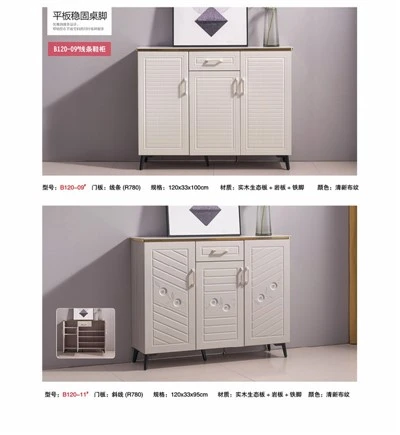
If you’re curious about what our open door wardrobes would look like in your space, or want to ask more specific questions about humidity, don’t hesitate to reach out and connect with our team for a procurement chat. We’re here to walk you through sizing, material options, and even add-ons like dehumidifiers or dust covers to make sure your wardrobe lasts as long as possible, no matter how humid it gets. No sales pitch, just real talk about what works for your space.
Shoe Cabinet with Doors References
- American Society of Heating, Refrigerating and Air-Conditioning Engineers (ASHRAE). (2021). Ventilation and Indoor Air Quality for Residential Spaces. ASHRAE Standard 62.2.
- Journal of Housing and the Built Environment. (2019). The Impact of Relative Humidity on Mold Growth in Residential Storage Spaces. Vol. 34, Issue 2, pp. 415-432.
- Wood Products Council. (2020). Moisture Resistance of Solid Wood vs. Engineered Wood in High Humidity Environments. Technical Bulletin 12-20.
- Textile Research Journal. (2021). Moisture-Wicking Fabrics for Closet Storage: A Comparative Analysis. Vol. 91, Issue 15, pp. 1789-1802.
Ganzhou Nankang Jijun Furniture Co., Ltd.
As one of the most professional open door wardrobe manufacturers and suppliers in China, we also support customized service. Welcome to buy premium open door wardrobe made in China here and get pricelist from our factory. For price consultation, contact us.
Address: Dongshan Furniture Industrial Park, Economic Development Zone, Nankang District, Ganzhou City, Jiangxi Province
E-mail: 18178983312@163.com
WebSite: https://www.jijunhome.com/
