Let me take you behind the scenes of what actually makes a generator run reliably, because most people don’t stop to think about the quiet, hardworking part that keeps the whole operation from overheating: the generator cooler. I’ve been selling custom generator coolers for 12 years now, and I’ve seen firsthand how a cooler that’s mismatched, poorly maintained, or just plain wrong for the job can turn a $50,000 generator into a paperweight faster than you can say “outage.” Today, I’m breaking down exactly how these underrated components impact a generator’s overall performance, why picking the right one isn’t just a “nice to have,” and what to watch out for if you’re already relying on one to keep your power up. Generator Cooler

Let’s start with the basics most generators don’t talk about—heat is the silent enemy. Generators work by converting mechanical energy into electrical energy, and that conversion isn’t 100% efficient. For every 100 units of mechanical energy you put in, you’re only getting 92 to 96 units of electrical energy out. The lost energy? It turns into tons of heat—up to 40% of a generator’s total output, depending on its size and type. That heat doesn’t just dissipate on its own; if it builds up inside the generator’s windings, core, and bearings, it’s like pouring gasoline on a tiny fire. Winding insulation starts to break down, metal parts expand and warp, and bearings seize up. A generator that runs consistently over its rated temperature by just 10°C cuts its lifespan by half. No one wants a $200,000 industrial generator dying three years early because their cooler was too small.
So, how does the generator cooler stop all that? Think of it as the generator’s life support. Its core job is to move excess heat away from the hot components—usually the stator windings, rotor, and the engine block of the generator’s prime mover, whether that’s diesel, natural gas, or even a gas turbine. There are two main types of coolers I work with every day, and I see way too many people mix them up, which leads to big performance issues. The first is air-cooled coolers, which use fans to blow ambient air over finned tubes filled with a coolant (usually deionized water or an ethylene glycol mix). These are common in smaller, portable generators or those in well-ventilated spaces like construction sites. The second is liquid-cooled coolers, which are basically radiators: they circulate coolant through the generator and release heat via a separate heat exchanger, often paired with a secondary cooling loop for bigger, standby generators that run 24/7 in data centers or hospitals.
Here’s where the performance impact gets real. Let’s take a recent example: a 2MW natural gas generator I installed a custom liquid cooler for three months ago. The customer told me their old cooler was a one-size-fits-all unit they picked up at a local parts store, and it was running the generator 8°C over its maximum rated temperature. They were losing 5% of their power output because the generator’s control system was throttling back to keep from overheating. After we swapped in a cooler sized exactly for their generator’s heat load—calculated based on their ambient operating temperature, humidity, and how often the generator runs peak loads—their heat dropped to 1°C under the max limit, and their power output jumped 5%, adding an extra 100kW of usable electricity they were already paying for but couldn’t access. That’s not a tiny win; that’s enough to power 10 average-sized retail stores, all because of a better cooler.
Another big one is efficiency, and that ties directly to fuel costs—something every generator owner cares about. If a generator is running too hot, it has to work harder to maintain its output, which means burning more fuel. I’ve had clients with 5MW generators that were wasting 12% more fuel a month because their old cooler was clogged with dust and mineral deposits, reducing heat transfer by 30%. When we cleaned or replaced their coolers, their fuel usage dropped by that same 12%. For perspective, a 5MW generator burns about 1,500 gallons of fuel a week at full load. That’s 180 extra gallons a week, or over $5,000 a month in wasted money—all from a cooler that wasn’t doing its job. It’s like driving a car with the brakes on; you might not notice the extra drag at first, but over time, it adds up to way more than the cost of fixing it.
Reliability is the next big factor, and this is where coolers go from being a component to a critical part of uptime. Standby generators, for example, are supposed to kick in when the grid goes down—think hospitals, cell towers, grocery stores. If their cooler fails, the generator won’t run at all when they need it most. Last year, I worked with a hospital in the Midwest that had a 1.2MW generator for emergency power. Their old air cooler’s fan motor seized during a storm, and by the time maintenance noticed, the generator’s winding insulation had already softened from overheating. They had to order a new stator, which took two weeks, and during that time, they had to rent temporary generators at $2,000 a day. The total cost? Over $40,000, plus the risk of being without power during a long outage. That’s a cost no one expects, and it all starts with a cooler that wasn’t properly maintained or sized. Even for generators that run regularly, cooler issues lead to unplanned downtime, which is a nightmare for any business that relies on consistent power.
Wait, but what about maintenance? A lot of people think coolers are set-it-and-forget-it, but that’s not true. How a cooler performs over time has a lot to do with upkeep. For air-cooled units, dust, dirt, and debris get trapped in the fins, blocking airflow. For liquid-cooled units, mineral buildup from hard water or corrosion from old coolant creates a layer on the heat exchanger tubes, just like limescale in a coffee pot. That layer reduces heat transfer efficiency, so the cooler has to work harder, which makes the generator run hotter. I recommend having coolers inspected every six months, even if the generator seems to be running fine. A quick flush or a fin cleaning can extend a cooler’s lifespan by five years or more, and keep the generator performing at its peak. I had a client with a 10MW generator that skipped two years of maintenance, and when we pulled the cooler off, we found 1/8 inch of limescale on the tubes. We had to replace the cooler, and the generator’s power output dropped 7% because of the permanent heat damage to the core.
Now, let’s talk about sizing, because this is the most common mistake I see. A generator’s cooler needs to be sized to match its specific heat load, not just its kW rating. Ambient temperature matters too—if a generator runs in a hot climate like Arizona or Texas, it needs a larger cooler than the same model would in a cooler place like Minnesota. Humidity is another factor: in high humidity, air can’t hold as much heat, so air-cooled coolers have to work harder. If you size a cooler for a dry climate and put it in a humid one, it won’t be able to dissipate enough heat, and the generator will run too hot. I once had a client in Florida who bought a used cooler from a supplier in Nevada, and within a month, their generator was tripping on overheat alarms. We re-sized the cooler for their local humidity and temperature, and the problem went away. It sounds simple, but you’d be surprised how many people skip that step.
I also want to mention a trend I’ve seen more of lately: custom coolers for variable load generators. A lot of businesses are running generators that switch between partial and full load, especially with the rise of solar and wind backup systems. A one-size-fits-all cooler that’s sized for full load will be oversized when the generator is running at partial load, which wastes energy. A custom cooler that adjusts its airflow or coolant flow based on the generator’s actual load keeps heat at an optimal level all the time, improving overall efficiency even when the generator isn’t running at full tilt. That’s a game-changer for businesses that rely on renewable energy plus backup power, because it reduces both fuel costs and wear on the generator.
Let’s wrap this up with what I tell every client, whether they’re buying a new cooler or troubleshooting an old one. The generator cooler isn’t an afterthought—it’s the component that keeps the generator running at peak efficiency, extends its lifespan, and prevents costly downtime. If your generator is running over its rated temperature, using more fuel than it should, or throwing random overheat alarms, the first place I look isn’t the generator itself—it’s the cooler. It’s often the culprit, and fixing it is way cheaper than replacing a generator or paying for unplanned downtime.
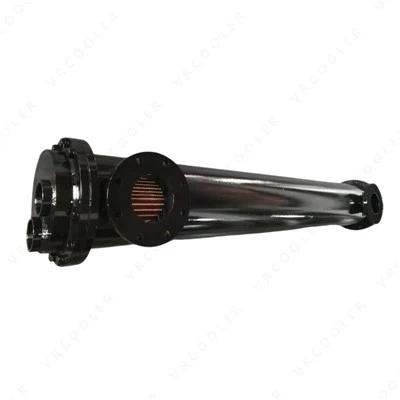
If you’re not sure if your cooler is doing its job, or if you need a custom cooler sized for your specific generator and operating conditions, I can help. I’ve been working with generator coolers for over a decade, and I’ve helped hundreds of clients across industries—from data centers to construction sites to hospitals—improve their generator’s performance, cut fuel costs, and reduce downtime. Don’t wait until your cooler fails and your generator goes down when you need it most. Reach out to start a conversation about what cooler is right for you.
Thermal Generator Cooling References:
- Generator Maintenance Fundamentals, National Electrical Manufacturers Association (NEMA), 2021
- Heat Transfer in Industrial Generator Cooling Systems, Journal of Power Generation Engineering, Vol. 14, No. 3, 2020
- Standby Generator Reliability: Impact of Cooling System Performance, Electrical Construction & Maintenance, 2022
Changzhou Vrcooler Refrigeration Co., Ltd.
Changzhou Vrcooler Refrigeration Co., Ltd. is one of the most professional generator cooler manufacturers and suppliers in China, specialized in providing high quality aftermarket service. Please rest assured to buy high-grade generator cooler for sale here from our factory. For price consultation, contact us.
Address: No. 18-69,Changwu Zhong Road, Wujin district, Changzhou, Jiangsu
E-mail: info@vrcooler.com
WebSite: https://www.vrcooler.com/
