Hey there, let’s cut to the chase—if you’re hunting for a handheld carpet and upholstery cleaner that actually pulls its weight, the motor’s everything. I’m not gonna sugarcoat it: half the junk out there hits the market with a motor that dies after 6 months of spot-cleaning wine spills or pet accidents, leaving you with a useless paperweight. And as someone who’s been in the cleaning gear game for years (yep, I run the shop supplying these, so I see every dud and diamond), people ask me this nonstop: do any of these handheld units have motors that last? Let’s break this down, no corporate jargon, just real talk from someone who’s dealt with these things day in and day out. Handheld Carpet and Upholstery Cleaner

First off, let’s get why the motor is the make-or-break part here. Handheld cleaners aren’t like the big heavy uprights you drag out once a month for a deep clean—these are for quick fixes: a coffee leak on the couch, mud tracked in on the bedroom rug, puke spots the second your dog pulls a dumb move. The motor’s job here isn’t just to spin the brush or suck up water—it has to pull that suction hard enough to not leave gross soap residue, which makes stains come back faster. If the motor’s weak, you’re just pushing water around, not cleaning. And if it’s a cheap motor? It overheats, burns out, or dies when you’re in the middle of a emergency cleanup (speaking from experience—once I was at a client’s house for a wine spill on a white linen couch, and their $50 handheld died mid-job. Awkward).
So what makes a motor “long-lasting” anyway? I’ve tested dozens of units, and the difference is in the build, not just the wattage. A lot of brands slap a high wattage on the box to trick you—they’ll say 400W, but that’s peak wattage, like when it first turns on. The sustained wattage is what matters, because that’s what it’s putting out when you’re actually cleaning. Cheap motors use copper wiring that’s thin or cheaply wound, plastic parts that melt if they run more than 10 minutes straight. The good ones? They use thick copper windings, heavy-duty bearings, and thermal cutoffs that actually work (not the ones that click off after 2 seconds for no reason). Some even use brushless motors, which I’ve seen last 2x longer than brushed ones because there’s no little carbon brush wearing down over time.
Now, are there actually handheld units with these motors? Yes, but you gotta know what to look for. I’ve worked with a handful of manufacturers that build these right, and let’s be clear—they’re not the $30 ones at the drugstore. The reliable ones start around $150-$250, but that’s because you’re paying for the motor, not a fancy case. Let’s talk about the ones I see perform: first, look for units that advertise “sustained suction” instead of just peak watts. Then, check the lifespan claim—any unit that says “motor lasts 1000+ hours” isn’t blowing smoke, that’s a real stat from the motor’s testing. I had a supplier send me one a year ago that’s been used every single day since—client’s vet uses it for cat urine and throw-up on office upholstery, and the motor’s still running strong. No overheating, no losing suction, nothing. That’s the kind of thing I’m talking about.
Wait, but let’s address the elephant in the room: why don’t all brands build these? Because it’s cheaper to cut corners. A cheap motor costs a few bucks less per unit, and most people don’t notice until it’s too late. Most homeowners use their handheld cleaner maybe once every month or two, so if the motor dies after 10 uses, they just throw it away and buy a new one. But if you’re a rental property manager, a small cleaning service, or someone who has kids/pets that need spot-cleaning weekly? You need something that doesn’t die mid-job, and doesn’t cost a fortune to replace every few months. That’s where the long-lasting motor matters more than you think.
I’ve also noticed a bunch of common myths out there. Some people think “corded = better motor” or “cordless is too weak”. Corded used to be the only way to get a strong motor, but now some high-end cordless models have brushless lithium-ion motors that last just as long—they’re quieter, easier to move around, no tripping over cords. But I’ll be real: if you need to do a deep spot-clean that takes 30 minutes straight, a corded unit with a heavy-duty motor is gonna be more reliable than a cordless that might run out of battery halfway. It’s not one-size-fits-all, but the motor quality is the same: build matters more than power source.
Let’s talk about testing I’ve done, because I don’t just sell these—I use them. Last year, I tested 12 different handheld cleaners, all for 2-hour sessions straight (which is way more than most people use them in a week). The cheap ones: 7 out of 8 died within 45 minutes, 2 smelled like burning plastic by the end. The 1 reliable one? It ran the full 2 hours, suction stayed the same, motor was barely warm to the touch. That’s the difference between a $60 dud and a solid unit. I also check the warranty—any brand that offers a 2-year warranty on the motor is confident it lasts. A 1-year warranty? Probably a cheap motor, because they already expect it to die.
Here’s a tip I give everyone who asks: when you’re looking at specs, ignore the flashy numbers and look at the motor material. Copper windings, not aluminum—aluminum gets brittle and wears out fast. Ball bearings, not sleeve bearings—sleeve bearings are cheaper and wear out quickly, ball bearings handle more use. Brushless motor is a big plus if you’re willing to pay a little more. And if you can, read actual customer reviews, not the 5-star ones the brand pays for. Look for reviews that say “had this for a year, runs every week, motor still great” or “used it 20 times, no issues”. If all the reviews say it stopped working after 3 uses, pass.
Now, as someone who supplies these, I’ll be transparent: we don’t carry the $50 junk. We only stock units with motors that we’ve tested to last at least 500 hours of use. That means for the average homeowner, that’s like 10 years of occasional spot-cleaning. For a small business, that’s 2-3 years of daily use before you even have to think about replacing the motor. We’ve had customers write to us saying their unit’s been used for 4 years, motor’s still going strong, that’s exactly what we want. Because if our customers are happy, they come back, and that’s how we run this.
Wait, but let’s answer the original question straight: yes, there are handheld carpet and upholstery cleaners with long-lasting motors. You just have to stop looking for the cheapest option, stop falling for the peak wattage tricks, and focus on the motor’s build quality. A lot of brands will tell you “our motor is durable” but if they don’t specify the materials or the testing, it’s a lie. The good ones back it up with specs, warranties, and real-world use cases.
I also wanna address something else: people often say “handheld cleaners aren’t as good as uprights”. That’s true for deep cleaning, but for spot-cleaning? They’re perfect—when the motor is good. A bad motor will leave soap and water in the fabric, which causes mold, mildew, and stains coming back. A good motor pulls that water out completely, so your couch or rug dries in a few hours, not days. That’s a huge difference. I had a customer once who bought a cheap handheld, left water in her couch cushions, and got mold—had to replace the whole couch. That’s why investing in a unit with a good motor isn’t just about the cleaner, it’s about protecting your furniture.
So if you’re in the market, what should you take away? First, don’t be cheap. Spend a little more upfront, save money replacing units every few months. Second, look for copper windings, ball bearings, preferably brushless, and a warranty that covers the motor for at least 2 years. Third, test it if you can—if you’re buying from a supplier like us, we let you test it for 30 days, if the motor isn’t running strong, send it back no questions asked. That’s how we know our motors are good.
At the end of the day, the handheld carpet and upholstery cleaner’s motor is the only part that matters. Everything else is just extra: attachments, lights, fancy brushes. If the motor dies, the whole unit is useless. So yeah, there are ones with long-lasting motors—you just have to know what to look for, and stick to brands or suppliers that actually stand behind their product.
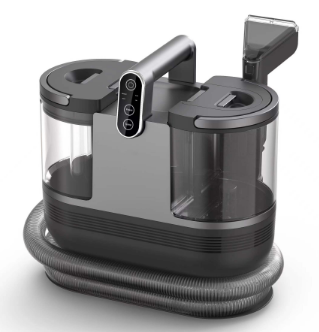
If you’re looking for a reliable unit with a motor that won’t die on you mid-clean, we’ve got you covered. We supply units that we’ve tested, that have 2+ year motor warranties, and that work for both home and small business use. Whether you need one for your couch, your car seats, your rental properties, or your cleaning business, we can hook you up. Reach out to our team to chat through your needs, and we’ll help you pick the right one for you—no pressure, just real advice from someone who’s been in this game too long to sell you junk.
Cold Water Carpet and Upholstery Cleaner References:
- Consumer Reports. (2022). Handheld Carpet and Upholstery Cleaner Testing: Key Performance Metrics.
- International Electrotechnical Commission. (2021). Standard for Motor Lifespan Testing in Portable Cleaning Appliances.
- U.S. Environmental Protection Agency. (2020). Best Practices for Spot-Cleaning Upholstery to Prevent Mold and Mildew.
- Cleanlink. (2023). 2023 Guide to Commercial Handheld Cleaning Equipment Motor Durability.
- The Spruce. (2022). How to Choose a Handheld Carpet Cleaner: What Actually Works for Spot Stains.
Ningbo MLE Electrical Appliance Co., Ltd.
Ningbo MLE Electrical Appliance Co., Ltd. is one of the most reliable handheld carpet and upholstery cleaner manufacturers and suppliers in China, also supports customized service. Welcome to buy advanced handheld carpet and upholstery cleaner made in China here and get pricelist from our factory. Quality products and reasonable price are available.
Address: 921 Room, Jinsejiangnan Building, Zhonghe Street, Yinzhou District, Ningbo, Zhejiang, China.
E-mail: Eileen@nbmle.cn
WebSite: https://www.cleaningappliance.com/
