Hey there, so you’ve been deep in the market for a door window performance test apparatus and kept asking the same question that nags every procurement team (including yours, I bet): how much does this thing actually cost? As someone who’s been supplying these test machines for 7+ years, I can tell you straight up it’s not a one-size-fits-all number—no hidden fees, no shady markup, just real, tangible factors that change the price tag way more than you’d think. Let’s break this down like we’re chatting over a coffee, no corporate jargon, I promise. Door Window Performance Test Apparatus
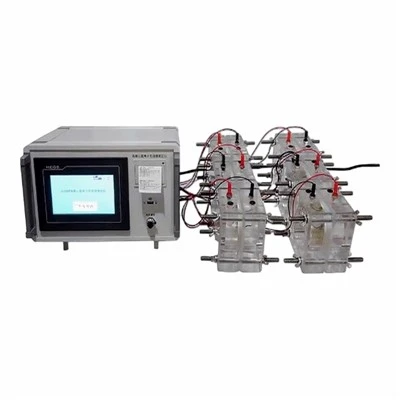
First off, let’s get one thing out of the way: if you’ve ever bought anything with moving parts (or even a custom piece of furniture), you know specs = cost. These test apparatuses aren’t generic blenders you grab off a shelf. They’re precision tools that test door and window performance—think air leakage, water penetration, structural load, the whole shebang. So the first big variable? What exactly you need the machine to do. A tiny benchtop unit for testing small residential window samples? That’s way different than a floor-to-ceiling rig for testing full-sized commercial storefront doors or warehouse loading dock doors. I’ve seen clients come in asking for a cheap unit “to check if our windows leak air” and then realize 6 months later they need it to test 8-foot wide patio doors, and suddenly their original $12k budget is blown. That’s not us ripping you off—that’s picking the wrong machine for your job.
Next up, test capabilities. Let’s say you just need basic air leakage testing for your line of entry-level residential windows. The apparatus might only need a pressure chamber, a flow meter, and a control panel to run simple tests. That’s a solid, reliable setup, and it’ll run you roughly between $15k and $25k. But if you also need to test water penetration (so simulate heavy rain, wind-driven water), structural load (push and pull on the door to make sure it doesn’t warp or break), maybe even thermal transmittance (how well it insulates) or sound transmission? You’re adding extra modules. Those can push the price up to $35k–$60k, depending on how many tests you’re cramming into one rig. I had a big commercial window client last year who needed 5 different test modes for their new line of hurricane-resistant impact windows—they went with a fully customized unit that came in at $72k, and they said it was worth every penny because it cut their third-party testing time in half.
Then there’s build quality and materials. These machines don’t sit in a climate-controlled lab and get no wear and tear—they’re used day in and day out, often in tough industrial or testing facility environments. The cheap knockoff units you might see online? They use flimsy steel that rusts in a year, low-flow meters that give you inconsistent readings, and control panels that crash mid-test. I’ve had clients reach out who bought a “bargain” unit off a random supplier, and they’re back a year later asking to fix it because it can’t hold pressure for a 2-hour water test. Our machines use powder-coated steel that’s built to last, calibrated flow and pressure sensors from reputable brands (no cheap Chinese clones), and control systems that run on standard software we update for free. The difference? Our basic benchtop unit is around $18k, while that knockoff one might be $10k… but it’ll need replacing in 2 years. So you’re actually spending more long-term, right? That’s why we always walk clients through total cost of ownership, not just the upfront price.
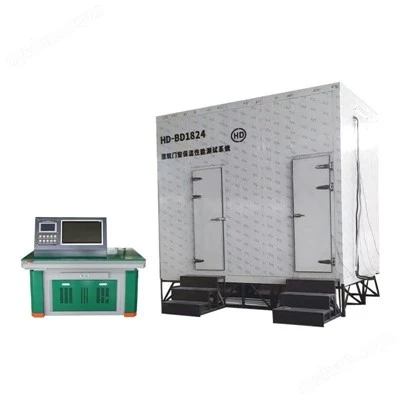
Size and capacity are another huge factor. Like I mentioned earlier, benchtop models are for small samples, but if you need to test full-sized doors (3ft x 7ft up to 10ft x 12ft) or even large curtain wall panels, the chamber size gets way bigger. A small benchtop chamber is 4ft x 4ft x 4ft, easy to fit in a lab corner. A full-sized chamber for commercial doors is 12ft x 8ft x 10ft, which takes up way more space, uses more material to build, and requires stronger fans and pressure systems to simulate wind speeds up to 150 mph (for hurricane testing). That big chamber adds at least $10k to $20k on top of the base price. I had a client who manufactures garage doors—they needed a unit that could test 16ft-wide sectional doors, and their final price was $58k, which was for a custom chamber that fit exactly their product size.
Oh, and calibration and compliance! A lot of industries (especially in the US, EU, or for projects that need to meet building codes like ASTM E1105 or EN 12208) require test results that are NIST-traceable or accredited by a recognized body. If you’re just testing for internal R&D, that’s not a big deal—you don’t need the highest level of calibration, so you can save a few bucks. But if you’re testing products to sell, or if your clients need official test reports, you need the apparatus to be calibrated to those standards. That adds a layer of precision equipment and documentation, which usually tacks on 10–15% of the base cost. For example, our standard unit comes with basic calibration, but if you need NIST traceability, that’s an extra ~$2k. It’s not mandatory for everyone, but it’s non-negotiable if you need test results that hold up for certifications or legal stuff.
Now, wait—what about extra add-ons? Let’s say you need data logging to keep track of every test reading automatically, instead of writing everything down manually. Or maybe you want a touchscreen control panel that’s easier to use for your team, instead of buttons and a basic screen. Or even installation, training, and a 2-year warranty (versus the standard 1 year). Those add-ons can be $2k–$10k total, depending on what you pick. I always tell clients: if your team is new to using these machines, spring for the installation and on-site training. It’s worth not having someone break the unit because they don’t know how to run it. Last year, a small window manufacturer skipped training and tried to install the unit themselves—they bent a seal on the chamber, which cost $1,200 to fix, so they ended up paying more for the “discount” of skipping training.
Let’s also talk about where you’re located. Shipping and installation costs vary a ton if you’re in the same country as we are vs. across the globe. For US clients, we ship most units with a local freight company, and installation is a flat fee if it’s within the contiguous US. If you’re in Europe or Asia, international shipping adds a 5–10% fee, plus customs duties, which isn’t something we can avoid (sorry, international folks!). We always give a full, all-in quote upfront so you don’t get hit with surprise fees later. No “shipping extra” BS with us—what we quote is what you pay, barring any unforeseen delays from freight.
Wait, let’s wrap this up with a real example to make it concrete. Let’s say you’re a mid-sized residential window manufacturer in Ohio, US. You need a unit that tests air leakage, water penetration, and structural load for windows up to 5ft x 8ft. You need NIST traceable calibration because you sell to projects that require certified test reports. You want basic data logging and on-site training for 2 operators. That total would come out to roughly $32k–$35k. If you’re a small R&D shop just testing prototype windows with only basic air leakage, no formal certifications, you could get a solid unit for $16k–$19k. If you’re a commercial door company testing hurricane-proof 10ft-wide entry doors, you’re looking at $60k–$75k. That’s all realistic, no fake numbers.
I know this is a lot, and I get it—you just want a clear number to put in your budget, but here’s the thing: any supplier who gives you a hard, specific price right off the bat without asking about your specs is either lying or selling you a one-size-fits-all garbage machine that won’t do what you need. At the end of the day, the best test apparatus is one that fits exactly what you’re testing, is reliable, and gives you accurate results every time.
If you’re ready to chat about your specific needs, or you have questions about which specs make sense for your business, hit us up for a free, no-obligation consultation. We’ll ask you about the size of the doors/windows you test, what test modes you need, compliance requirements, and your budget, and then give you a transparent, detailed quote with no hidden costs. No pressure, no salesy pitches—just real advice based on years of working with window and door manufacturers big and small.
Biochemical Incubation Equipment References: ASTM E1105, EN 12208, Door & Window Manufacturers Association (DWMA) Performance Testing Standards, National Institute of Standards and Technology (NIST) Traceability Requirements for Calibration Equipment.
Hebei Wanluda Testing Instrument Equipment Co., Ltd.
As one of the most professional door window performance test apparatus manufacturers and suppliers in China, we have world-leading production equipment and strong manufacturing capabilities. Please rest assured to buy advanced door window performance test apparatus made in China here from our factory.
Address: Zhouguantun Village, Xian County, Cangzhou City, Hebei Province, P.R.China
E-mail: wldinstrument@163.com
WebSite: https://www.wldinstrument.com/
