If you’ve ever had a fridge die out of nowhere, or a laptop fry during a random thunderstorm, you’ve probably wondered what the heck causes that. Spoiler: it’s almost never just the storm itself. Most of the time, it’s something called a “surge” — a sudden, random spike of electricity that zaps through your wiring and turns perfectly good electronics into paperweights. As a guy who’s been in the surge protection device (SPD) game for over a decade, I get asked this question all the time: what even is the function of these things, and why do you need them if your building has a breaker panel? Let’s break it down like we’re grabbing a coffee after work — no stuffy engineering jargon, just real-world stuff that matters. Surge Protection Device
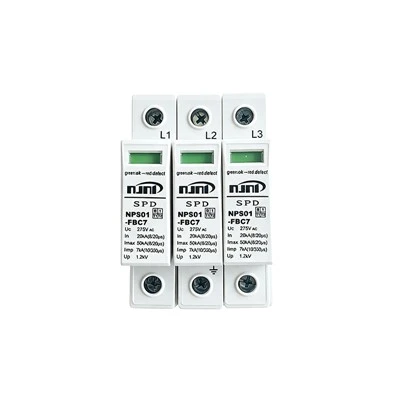
First, let’s get one thing straight: breakers and fuses are NOT surge protectors. I see this mistake all the time, even with electricians who’ve been doing this for years. Breakers are designed to stop overloads — like if you plug 10 space heaters into one outlet and the wires get too hot. They flip when current gets too high over a long period, not when there’s a random, super-short spike of electricity. A surge is different: think of it like a firehose suddenly blasting water at full force instead of a steady stream. That spike can be thousands of volts, and it happens in nanoseconds — way too fast for a breaker to catch. That’s where an SPD comes in. Its whole job is to siphon off that extra voltage before it can get to your expensive gear.
Let’s talk about where surges even come from, because a lot of people think it’s only thunderstorms. Yeah, lightning is a big one — if a strike hits nearby power lines, that energy bounces through the grid all the way to your building. But surges are way more common from regular daily stuff. Ever seen a truck zoom past your neighborhood and your Wi-Fi flickers? That’s a utility company switching big power lines on or off, creating a spike. Or what if your HVAC system kicks on at 7 a.m. — those big motors draw a ton of current all at once, and that can create a surge that travels back through the wiring. Even something as simple as plugging in a brand-new TV can cause a tiny surge, but if you have a bunch of those happening over months or years, that’s called “wear and tear” for your electronics. That’s why you might notice your phone battery dying faster than it used to, or your smart lights flickering for no reason — it’s not just old age, it’s small, constant surges chipping away at the parts.
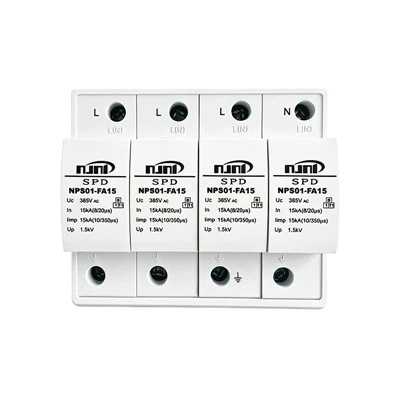
So how does an SPD actually do its job? Let’s keep it simple. The SPD is installed somewhere in your electrical system — usually at the main breaker panel first, like a guard at the front door, and sometimes smaller ones at specific outlets or for big gear like fridges, servers, or gaming setups. When normal electricity is flowing, the SPD basically sits there quietly, doing nothing. But when that spike hits, it detects that extra voltage in a fraction of a second, and it diverts that surge safely into the grounding wire instead of letting it go to your stuff. It’s like having a really fast friend who pulls you out of the way right before a bike hits you — way quicker than you could react, and it doesn’t mess with the normal power you need.
Wait, but not all SPDs are the same, right? I see a lot of cheap ones at the hardware store that say “surge protector” on the box, and those are great for a laptop you plug into an outlet temporarily, but they’re not the same as the industrial-grade SPDs we sell for whole buildings. Let’s clarify: there are two main types, and they do slightly different things. Type 1 SPDs are installed at the main utility connection point outside or at your main panel — they handle the biggest surges from lightning or grid switching. Type 2 are inside the panel, or at sub-panels, to catch any leftover surge from Type 1. Type 3 are the little ones you plug into your wall for single devices, like the ones you buy for your PS5. All of these follow the same basic function, but their size and capacity change based on how much surge they need to handle. The key here is that a whole-building setup is way more effective than just plugging a few things into a $10 strip — it’s like putting a guard at every door instead of just your living room one.
Let’s talk about why this actually matters for you, not just for engineers. I once had a customer who ran a small bakery — they had a commercial oven, a fridge full of inventory, and a POS system. One summer, a thunderstorm rolled through, and even though lightning didn’t hit their building, a nearby strike sent a surge through the power lines. Their old little plug-in surge strip on the POS fried, and they lost all their transaction data plus had to replace the oven’s control panel. That cost them over $10k in lost sales and repairs. Six months later, they called me to install a whole SPD system. A few months after that, another storm hit — this time, the surge got siphoned off safely to ground, and they didn’t even lose power for a second. That’s the function right there: protecting your wallet, your data, and the stuff you rely on every day.
Another big thing I get asked: does an SPD wear out? Yeah, it does. Every time it diverts a surge, it takes a tiny bit of damage, like a airbag deploying — you can’t reuse it once it’s gone off enough times. That’s why it’s important to test your SPD regularly, especially after a big storm or if you notice weird electrical issues. The good news is that most modern SPDs have a little indicator light — green means it’s working, red means it’s time to replace it. We even add that as a standard feature on all our units, because no one wants to find out their SPD is dead right when a storm hits.
Wait, let’s bust a myth here: some people think their building’s grounding system is enough. No, grounding is part of the equation, but the SPD is the middleman that connects the hot wire (the one carrying power to your stuff) to the ground. Without the SPD, that surge has nowhere safe to go, so it has to go through the electronics instead. It’s like if you’re trying to get home and the main road is closed — you could cut through your neighbor’s yard (that’s what happens to your electronics) or take a pre-planned detour (that’s what the SPD provides).
Now, let’s talk about where we fit in, since we’re an SPD supplier that’s been around the block. We don’t just sell boxes that “stop surges” — we size them for your specific system. A tiny home office has different needs than a 10,000 sq ft warehouse with a server room, right? We don’t do one-size-fits-all, because that’s a waste of money and doesn’t work. When a customer reaches out, we ask them what kind of building they have, what gear they rely on, where it’s located (near busy roads or a frequent thunderstorm area?), and we recommend the right Type 1, 2, or 3 units, plus how many they need, and where to install them. We even work with electricians to make sure the setup is done correctly — because even the best SPD is useless if it’s wired wrong.
I know electrical stuff can feel overwhelming, but the function of an SPD is simple: it’s the unsung hero of your electrical system, preventing random spikes from turning into expensive headaches. Whether you’re a homeowner worried about your new TV, a small business owner protecting your point-of-sale and inventory, or a big facility manager keeping servers and industrial gear running, an SPD is non-negotiable these days. The grid isn’t perfect, storms still happen, and all that cheap daily stuff we plug in adds up to tiny surges over time that slowly kill electronics.
If you’re not sure if your building has the right surge protection, or if you need to upgrade what you have, hit us up to chat. We can walk you through your options, no sales pitch pressure, just straight answers about what will actually work for you. Don’t wait until a random surge fries your stuff — that’s a way more expensive time to think about this.
Surge Protection Device References:
- Underwriters Laboratories. (2021). Standard for Surge Protection Equipment (SPD) for use in AC Power Circuits, UL 1449.
- International Electrotechnical Commission. (2020). Low-voltage surge protective devices – Part 1: Performance requirements and testing methods. IEC 61643-1.
- U.S. Department of Energy. (2019). Electrical System Surge Protection for Commercial Buildings. Energy Efficiency and Renewable Energy Office.
- Institute of Electrical and Electronics Engineers. (2018). Surge Protection in Low-Voltage Power Systems: A Practical Guide for Facility Managers. IEEE Press.
Nanjing Ningpu Lightning Protection Equipment Manufacturing Co., Ltd.
As one of the most professional surge protection device manufacturers and suppliers in China, we’re featured by quality products and good price. Please rest assured to buy customized surge protection device made in China here from our factory. Also, pricelist is available.
Address: Building 1, No.20 Shengyuan Road, Lishui Economic Development Zone, Nanjing City, Jiangsu Province, China
E-mail: 3796023563@qq.com
WebSite: https://www.npspd.com/
