If you’ve ever dabbled in water treatment for homes, commercial coffee shops, or industrial laundries, you’ve probably bumped into hot water RO (reverse osmosis) membranes. They’re game-changers for keeping water hot and pure—think dishwashers that don’t spot your silverware, or brewed coffee that tastes consistent every morning. But here’s the thing that trips so many people up: pH. It’s not just a random number you glance at on a test strip; it’s the make-or-break factor for how long your membrane lasts and how well it works. As someone who’s been in the hot water RO membrane supply game for over 12 years, I’ve seen so many folks burn out their units way too fast because they messed up the pH sweet spot. Today, let’s cut through the jargon and get real about what the optimal pH range actually is, why it matters, and how to nail it. Hot Water RO Membrane

First, let’s skip the boring textbook definition of pH and keep it relatable. pH measures how acidic or basic (alkaline) a solution is on a scale of 0 to 14. 7 is neutral—pure water, basically. Numbers below 7 mean it’s acidic (like vinegar), numbers above 7 mean it’s basic (like baking soda water). For regular cold RO membranes, people often stick to a pH range of 5 to 8, right? But hot water RO is different. We’re talking about water heated to 80°C (176°F) in many cases, or at minimum 60°C (140°F) to get that hot water performance. That heat amp up the chemical reactions happening inside the membrane, so the pH rules aren’t the same as cold RO.
From all the testing we’ve done in our own lab (we don’t outsource that, which is how we know this stuff firsthand), the sweet spot for most standard hot water polyamide RO membranes is between 6.5 and 7.8. Wait, I hear you—why such a tight range? Let’s break down what happens when you go outside of it, starting with acidic pH first. If your water is below 6.5, that’s too acidic. Acid eats away at the polyamide layer of the RO membrane, the thin, tough skin that does all the work of filtering out contaminants like lead, bacteria, and dissolved solids. At high temperatures, that acid corrosion speeds up exponentially. I remember a café owner who brought in his dead membrane after only 6 months—his water pH was 5.2, and he was running 85°C water through it. When we took the membrane apart, the polyamide layer was pitted, like a rusted nail left out in rain. That’s not a membrane working; that’s a sieve basically. And yeah, it’s way cheaper to just test your pH and adjust it than to replace a $1,500 membrane every 6 months.
Now, what about the other end of the spectrum—pH above 7.8, getting too alkaline? That’s another big no-no for hot water RO. Alkaline water, especially at high temps, causes scaling. Scaling is when dissolved minerals like calcium, magnesium, and carbonate stick to the membrane surface, building up a hard, white crust. Over time, that crust clogs the tiny pores of the membrane, so water can’t pass through as easily. You end up with lower flow rates, more energy used to heat water, and even more frequent cleanings. I had a commercial laundry client last year who was running at pH 8.5, and their membrane’s flow rate dropped by 40% in just 3 months. We adjusted their pH to 7.2 and put a simple scale inhibitor in, and their flow rate was back to normal within 2 weeks. The worst part? They thought alkaline water was “softer” because it had lower dissolved solids, but they mixed up total dissolved solids (TDS) with pH—two totally different things. Don’t make that mistake.
Wait, hold on—are there exceptions? Because no rule in water treatment is 100% universal. If you’re using a specialized high-temperature membrane designed for extreme conditions, like for industrial use where water hits 90°C (194°F), the range shifts a little. For those, we usually recommend 6.2 to 8.0. But that’s a niche case, not for your average home hot water system or small business. And another thing: if you’re using a membrane with anti-scalant or anti-corrosion additives built in, that can nudge the range a tiny bit, but never by more than 0.5 points. Always check the manufacturer’s specs for your specific membrane—we always include a spec sheet with every unit we sell, and if you lose yours, just hit us up and we’ll send a new one right over.
Let’s talk about why hot water makes pH so much more sensitive than cold. At higher temperatures, the molecular bonds in the polyamide membrane get looser, which means they’re more reactive to the chemicals in the water. Acid can break those bonds way faster when the membrane isn’t as tight, and alkaline minerals precipitate (turn solid) much more easily in warm water than cold. That’s why a pH that would work fine at 25°C (77°F) will destroy a membrane in half the time at 80°C. I’ve had customers ask, “Can I just use the same pH adjustment stuff I use for my cold RO?” The short answer is no—you need heat-stable pH buffers and scale inhibitors that don’t break down at high temps. Regular cold products will turn to sludge in your hot water lines, making the problem worse, not better.
So how do you actually nail this pH range? It’s not as hard as it sounds, promise. First, get a reliable pH meter, not those cheap test strips you grab at the grocery store. Strips are off by 0.5 to 1 point half the time, which is enough to mess things up. We recommend a portable digital pH meter for small systems, or a inline pH monitor for commercial setups that updates in real time. Second, test regularly—once a week for the first month after installing your membrane, then once a month after that. Water chemistry can change over time, especially if you have a new water source or add a new cleaning product. Third, adjust your pH with the right chemicals. If you need to raise pH (it’s too acidic), use food-grade sodium bicarbonate (baking soda) for small systems, or sodium hydroxide for larger commercial ones. If you need to lower pH (it’s too alkaline), use food-grade citric acid—super easy to find and safe for drinking water. Just follow the dosing instructions, don’t overdo it, and test after adjusting to make sure you hit that sweet spot.
Let’s also bust a couple of myths here. Myth #1: “Hot water RO membranes need to be acidic to prevent bacteria growth.” No, that’s not true—bacteria grow best in neutral to slightly alkaline pH, but membrane manufacturers build in anti-microbial properties now, and proper cleaning and disinfection are way more effective than tweaking pH. In fact, making your water too acidic to kill bacteria is just going to destroy your membrane. Myth #2: “If I run hot water at lower pH, I get better water quality.” Wrong—RO works on pressure and membrane pore size, not pH, as long as pH is in the optimal range. Staying in that range gives you both better performance and longer membrane life.
I’ve seen so many customers get 3-5 years out of their hot water RO membrane when they stick to 6.5-7.8, and others get less than a year when they ignore pH. At the end of the day, this isn’t rocket science—it’s basic maintenance that takes 5 minutes a week. And when you consider that a good hot water RO membrane is a big investment (we’re talking $1,000-$2,500 depending on size), spending 5 minutes a week to check pH is way cheaper than replacing it early.
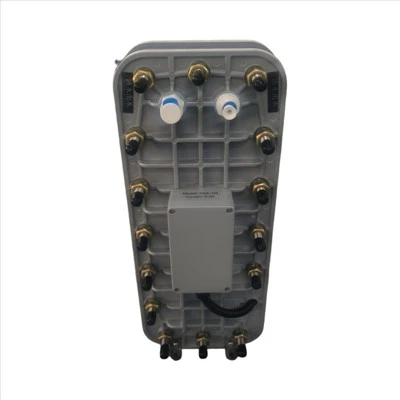
Now, if you’re wondering what size membrane you need, or you’re not sure how to test or adjust your pH, or you just burned out a membrane and need a replacement that’s actually designed for high temp, give us a holler. We don’t do pushy sales calls—we work with homeowners, coffee shop owners, laundries, and industrial facilities to find the right membrane for their exact water chemistry and usage. No generic one-size-fits-all garbage, no hidden fees, just solid advice from people who’ve been in the thick of hot water RO for decades. You don’t have to stress about getting pH right alone—we’re here to help.
Hot Water RO Membrane References
- Membrane Technology and Research, Inc. “High-Temperature Reverse Osmosis Membranes for Industrial Applications”, 2021.
- American Water Works Association. “Reverse Osmosis Membrane Performance Under Variable pH and Temperature Conditions”, AWWA Journal, Vol. 113, No. 4, 2022.
- Dupont Water Solutions. “Technical Guide for Hot Water Reverse Osmosis Membranes”, 2020.
- International Water Association. “Effects of pH on Polyamide Membrane Stability in Thermal Water Treatment”, Water Research, Vol. 198, 2021.
Fujian Huamo Technology Co., Ltd.
Fujian Huamo Technology Co., Ltd. is one of the most professional hot water ro membrane manufacturers and suppliers in China, featured by quality products and good service. Please rest assured to wholesale the best hot water ro membrane made in China here and get price list from our factory. Contact us for custom service and OEM service.
Address: No.6 Hengtong Rd, Shanmei Village, Xiamei Town, Nanan City, Fujian Province, China
E-mail: info@huaromembrane.com
WebSite: https://www.hmromembrane.com/
