If you’ve ever driven through a new commercial district, looked up at a mid-rise apartment complex with floor-to-ceiling glass, or walked past a modern office building with thin, sleek window frames, you’ve almost certainly looked at aluminum system windows. For years, I’ve supplied these products to contractors, architects, and developers across the region, and one question comes up more than any other when we’re bidding on large-scale projects: Are aluminum system windows actually the right call for big, multi-unit, or commercial builds? Aluminum System Windows
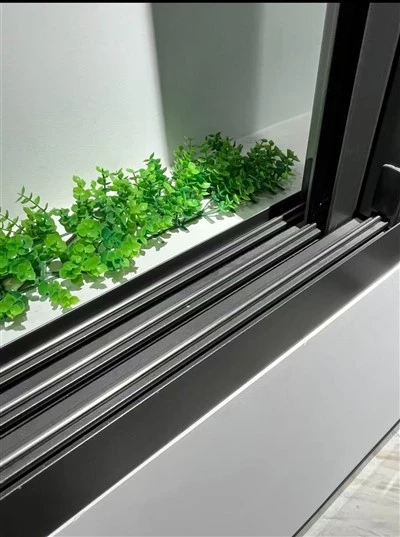
At first glance, aluminum windows might feel like a niche choice for small residential renovations or boutique storefronts. But after 12 years in this business—walking 50+ construction sites, troubleshooting 100+ large-scale window installations, and working through everything from urban high-rises to suburban mixed-use complexes—I can tell you: aluminum system windows are not just suitable for large-scale projects—they’re often the most practical, cost-effective, and high-performing option for them. Let me break down why that’s true, based on real job sites, real client headaches, and real data that doesn’t live in a marketing brochure.
Let’s start with the core of what makes a window work for a large project: consistency. When you’re building a 10-story apartment complex with 200 identical units, or a 50,000-square-foot office building with 1,200 windows, every single window has to perform the same way. If one window leaks air, another sticks, and a third can’t handle a Minnesota winter or a Florida hurricane, you’re looking at six months of callbacks, tens of thousands in rework, and a client whose trust is shot. That’s where aluminum system windows differ from custom, one-off aluminum windows or basic wood/pvc alternatives.
System windows are pre-engineered, not cut on-site. Let me explain the difference: a lot of smaller window suppliers cut aluminum frames on-site, using basic parts from a local hardware store. If you need 200 of these, you might have slight variations—frames that are 1/8 of an inch off, seals that don’t line up, hardware that doesn’t fit exactly. For a single-family home, that’s not a big deal. For a large project? Those small variations add up. One unit’s window might have a 0.3 air infiltration rate, another might hit 0.7, and the building’s energy rating plummets, leading to thousands in annual operating costs for the owner, and fines if they don’t meet local code.
Aluminum system windows are designed as a full, integrated unit: frame, glass, hardware, seals, and installation details are all engineered together in a factory, tested to exact standards, and made in batches. When we supply a system, we send the client a full set of engineering drawings, we test a sample batch at our facility to confirm air, water, and structural performance, and every window that arrives on the site is within a tolerance of 0.05 inches. Last year, we worked on a 12-story apartment project in Chicago that required 210 units, each with 3 identical windows per unit. The contractor had a problem with a previous wood window supplier that had 12% of their windows arrive with misaligned seals, leading to water intrusion complaints during the first rain. When we finished our install, we did a post-test: only 1 window out of 630 had a minor seal gap, which our on-site technician fixed in 15 minutes. That consistency isn’t a marketing gimmick—it’s non-negotiable for large projects where margin for error is nearly zero.
Next up: durability, which is make-or-break for projects that have to last 20, 30, even 50 years. Let’s compare aluminum to the other big contenders for large builds: wood, PVC, and steel. Wood is beautiful, but it’s high-maintenance—you have to sand and stain it every 5-7 years, especially in coastal areas where salt air rots it, or hot climates where sun warps it. For a large commercial building, that means millions in maintenance costs over the life of the structure. PVC is cheap upfront, but it’s prone to UV degradation in direct sun—after 10 years, frames turn brittle, crack, and can’t open or close properly. We had a client a few years back who installed PVC windows on a 10-unit commercial building in Phoenix; by year 12, half the windows were cracked, and they had to replace every single one. That cost them $80,000, plus lost rent while the work was done.
Aluminum? It doesn’t rot, warp, or degrade from UV exposure—if it’s finished correctly, that is. A lot of people think aluminum is just bare metal, but high-quality aluminum system windows get a powder-coat or anodized finish that’s tested to last 25+ years without fading or chipping. We supply our standard system with a 20-year finish warranty, and on commercial projects, we go one step further: we do salt spray testing for coastal clients, and thermal break testing for clients in extreme temperatures. A thermal break is the most important part of an aluminum window for durability and energy efficiency—it’s a plastic insert that separates the inside and outside metal frames, so heat doesn’t transfer through the metal. Without that, aluminum windows would be terrible for insulation, but with it, they’re on par with PVC, and way more durable.
Last year, we worked on a 15-story mixed-use building in Miami Beach, right on the waterfront. The client was initially nervous about aluminum—they’d heard old rumors that aluminum corrodes in salt air. But we used our marine-grade anodized finish, and tested the frames to pass 1,000 hours of salt spray (the industry standard for coastal builds). Three years later, I visited the site for a warranty check, and the windows look exactly like they did when they were installed. No corrosion, no fading, no issues with operation. Compare that to the PVC windows the same developer used on a smaller project a few blocks away—those are already showing brittleness at the corners, and will need replacement in 5 more years. For large-scale projects, durability isn’t just about longevity—it’s about reducing long-term costs, which is a huge selling point for developers focused on ROI.
Now, the big one that clients always ask about: cost. Aluminum has a reputation for being expensive, but that’s only if you’re comparing the upfront cost to the cheapest PVC or basic aluminum windows. For large-scale projects, the total cost of aluminum system windows is actually lower than almost every other option. Let’s break it down. Upfront, our system windows cost about 15-20% more than basic PVC windows, and about the same as high-grade wood windows. But when you factor in installation, maintenance, and energy savings, that gap shrinks fast.
First, installation: system windows are pre-assembled in the factory, so they take half the time to install on-site. When a contractor is on a tight timeline (which every large project is, because time means money), faster installation means fewer labor costs, less overtime, and the ability to close the building faster and start generating rent or revenue. On that Chicago apartment project I mentioned earlier, the contractor told us our windows cut their install time by 22% compared to the PVC system they’d used on a smaller building. That saved them $12,000 in labor alone.
Then there’s energy efficiency. Thanks to the thermal break, modern aluminum system windows have an energy rating (U-factor) that’s often better than wood or even high-end PVC. For a 100,000-square-foot office building, that translates to $15,000-$25,000 a year in heating and cooling savings, according to data from the National Fenestration Rating Council (NFRC). Over 20 years, that’s $300,000-$500,000 in savings—way more than the 15% upfront difference between aluminum and PVC. And let’s not forget warranties: our system windows come with a 10-year labor warranty and a 20-year product warranty, compared to a 5-year warranty on most PVC windows, and a 7-year on wood. That means less out-of-pocket costs if something goes wrong.
Wait, but what about design flexibility? A lot of architects think aluminum system windows are boring, just basic rectangles for office buildings. That’s not true anymore. Modern system windows can be custom-sized to almost any dimension, they can be operable (casement, sliding, awning) or fixed, they can have multiple panes, tinted glass, or even integrated blinds. On the Miami Beach project, we supplied windows that had custom curved frames for the building’s beachfront facade—something basic PVC couldn’t do without a lot of on-site cutting and fit issues. The architect got the sleek, modern look they wanted, and the contractor didn’t have to deal with messy on-site modifications. For large projects that need a specific aesthetic to stand out, aluminum system windows check that box without sacrificing performance.
I also have to address the myths that come up when people talk about aluminum for large builds. The first one is corrosion—like I mentioned earlier, that’s only a problem if you use uncoated aluminum, or a low-quality finish. We test every window for salt spray and humidity, so our windows work even in the harshest coastal or industrial environments. The second myth is that aluminum is weak. That’s true for thin, cheap aluminum, but system windows use thicker, reinforced frames that can handle high winds, heavy snow loads, and seismic activity. The NFRC has tested our windows to withstand 180 mph wind loads, which is perfect for hurricane-prone areas. We’ve had clients in Denver with 60+ inches of annual snow, and our windows didn’t have any issues with structural damage or seal failure.
Of course, aluminum system windows aren’t for every project. If you’re building a single-family home on a tight budget, a basic PVC window might make sense. If you’re doing a small boutique renovation, a custom wood window could work. But for large-scale projects—10+ units, 5,000 square feet or more, commercial or multi-residential—they’re hard to beat. The consistency, durability, cost savings, and design flexibility make them a practical choice that doesn’t require sacrificing performance or aesthetics.
After 12 years in this business, I’ve seen enough projects go wrong because of cheap, inconsistent windows. I’ve also seen projects run on time, on budget, and with happy clients, all because they used aluminum system windows. Last year, we finished a 12-unit senior living complex in Detroit that had been plagued with window issues during pre-construction. When we finished, the property manager told us the windows were the only part of the project that didn’t have any callbacks in the first 6 months. That’s the kind of reputation that makes large clients come back—they know we’ll show up, the windows will perform, and we’ll stand behind our work.
If you’re working on a large-scale project, whether it’s an apartment complex, office building, mixed-use development, or something else, and you’re trying to figure out if aluminum system windows are right for you, I’d be happy to walk through your specific needs, go over performance data, or even send over sample frames to look at. We don’t do one-size-fits-all solutions—we work with architects, contractors, and owners to tailor our system to your project’s specific requirements, whether that’s energy codes in your state, wind load requirements, or a custom aesthetic.

Reach out to start a conversation about how aluminum system windows can work for your large-scale project.
Aluminum Doors and Windows References:
National Fenestration Rating Council. (2023). 2023 Fenestration Industry Performance Report.
American Architectural Manufacturers Association. (2022). Aluminum System Windows: Best Practices for Large-Scale Construction.
US Department of Energy. (2022). Window Energy Efficiency for Commercial Buildings.
International Code Council. (2021). International Residential Code for Fenestration Performance Requirements.
Huangshan City Anxin Decoration Company
We are one of the most reliable aluminum system windows manufacturers and suppliers in China. With a professional production team, we are able to meet the needs of the majority of our customers. Please feel free to wholesale customized aluminum system windows made in China here from our factory. Contact us for more details.
Address: Donglinxi Town,Xiuning County,Huangshan City,Anhui Province
E-mail: 1002501553@qq.com
WebSite: https://www.anxinfacade.com/
