If you’ve ever walked through a fuel lab or a fleet maintenance bay, you’ve probably wondered: can the oil test equipment my team relies on for lubricants actually work for fuel oils? As an oil test equipment supplier with 12 years in this space, I get this question at least three times a week—from independent diesel mechanics to large marine fuel managers to new plant engineers just learning to navigate fluid testing. The short answer is: it’s not a yes or no, it’s a “it depends on what you’re testing, and how you adjust your approach.” Let’s break this down with real scenarios, not just lab jargon, because I’ve seen too many teams waste money buying separate fuel-specific gear when their existing oil test tools could do the job right. Oil Test Equipment
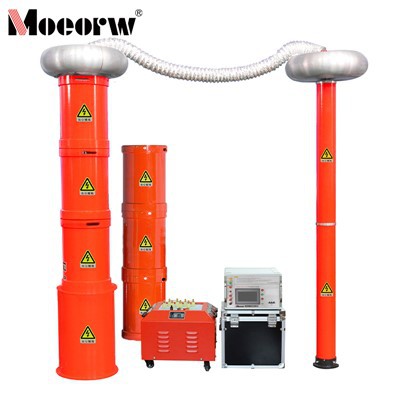
First, let’s clarify what we mean by “oil test equipment.” When I say that, I’m talking about the gear we manufacture and support: viscometers, oxidation stability analyzers, particle counters, flash point testers, moisture analyzers, and acid number titrators. All of these were originally designed for lubricating oils—the stuff that keeps engines, turbines, and gearboxes turning smoothly. Fuel oils—whether that’s marine bunker fuel, diesel, gasoline, or heavy fuel oil (HFO)—are different: they’re less viscous, have different chemical additives, more contaminants like sludge or biofuel residues, and their failure modes are tied to combustion instead of wear. But that doesn’t mean the tools can’t cross over.
Let’s start with the most common test teams ask about: viscosity testing. Viscosity is basically a fluid’s thickness, and it’s critical for both lubricants and fuels. For lubricating oils, we use kinematic viscometers, which measure how long it takes a fluid to flow through a capillary tube at a set temperature. For fuel oils, especially diesel and HFO, viscosity tells you how well it will atomize in an engine injector—too thick, and it clogs; too thin, and it leaks out of the nozzle. Wait a second—our kinematic viscometers don’t care if the sample is a lubricant or a fuel; they care about how the fluid moves. I’ve had a customer in the Caribbean run HFO tests on their lubricant viscometer for three years before reaching out because they thought they needed a $15,000 fuel-specific viscometer. They were right about the readings, but there’s a catch: fuel oils vaporize faster than most lubricants. If you’re testing fuel at the standard 40°C temperature we use for lubricants, you have to seal the viscometer cell to prevent evaporation—something we can add as a simple, low-cost modification to our standard units, instead of buying a whole new instrument. That’s the kind of adjustment that makes crossover work.
Next, particle counting. This test measures how many solid contaminants are in a fluid, which is non-negotiable for both lubricants and fuels. For lubricants, particles cause engine wear, so we count particles down to 4 microns to catch fine abrasive debris. For fuels, particles clog fuel filters and injectors, so the required count is usually larger—10 microns and up. But the particle counter itself is the same: it uses a laser to detect particles as they pass through a small flow cell. The only difference? Fuel samples are less viscous, so you have to adjust the flow rate to match—slower than you would for a thick gear oil, but that’s a quick setting change in our equipment’s software, not a hardware upgrade. I have a fleet maintenance client who tests both engine oil and diesel fuel on the same particle counter; they just swap the calibration standards (we can supply those for both fluid types) and adjust the flow rate, and they’ve cut their testing costs by 40% in two years. The mistake I see here is teams assuming particle counters need to be fuel-only, but they don’t—they’re just tools for measuring solid contamination, regardless of what the fluid is.
Now, the tests that don’t work as well: flash point testing. Flash point is the temperature where a fluid gives off enough vapor to ignite. For lubricants, we test closed-cup flash point because we’re dealing with sealed engine parts where vapor can’t escape. For fuel oils, especially gasoline or HFO, open-cup flash point is more accurate because those fuels often vent in storage tanks or open-air fuel lines. Our standard closed-cup flash point testers can be modified to run open-cup tests, but it’s not ideal—we recommend having a dedicated open-cup unit for fuels, because the heating profile and vapor capture are different. Another test: oxidation stability. Lubricants break down over time due to heat and pressure, forming sludge that clogs engines. Fuels oxidize too, but their oxidation happens much faster, especially when stored for long periods. Our oxidation analyzers measure the time it takes for a lubricant to form a layer of oxidized material, but fuels’ shorter stability means you’d have to run a test that’s adjusted for a much shorter time frame. That’s not impossible, but it requires method development, which some labs don’t have the bandwidth for—so in that case, a fuel-specific oxidation tool is worth the investment.
Moisture testing is another area where crossover works, with a twist. Both lubricants and fuels can have water contamination, which causes corrosion, filter clogging, and reduced performance. Our standard Karl Fischer titrators (the gold standard for moisture testing) work for both—fuels just need a different solvent to dissolve the sample without interference. I once had a customer who tried to test diesel moisture with a lubricant-grade solvent, and the readings were off by 30% because the fuel didn’t dissolve properly. Once we swapped the solvent, the results matched their third-party fuel lab’s numbers exactly. That’s a small, easy fix that makes the equipment work for both fluid types.
But let’s talk about the edge cases where oil test equipment falls short. High-sulfur heavy fuel oil, which is common in shipping, has a lot of acidic compounds that can mess with acid number titration, a test we use for lubricants to measure degradation. The titration method for fuels is different—using a different indicator electrode to handle the sulfur compounds, so our standard acid number tool can work, but you have to change the electrode. For some of our clients, that’s a one-time switch, not a big deal. For others, especially labs that test only marine fuels, it’s easier to have a dedicated fuel titrator. The key here is understanding your testing needs, not just buying into the myth that “fuel tests need fuel gear.”
Here’s a real example from my own team. Last year, we worked with a small independent lab in the Midwest that tested both motor oil for local garages and biodiesel fuel for farm equipment. They had a used lubricant viscometer and a basic particle counter, and they were paying $50 a sample to send fuel tests to a nearby lab. We walked them through adjusting their existing equipment: added a sealed cell to the viscometer for fuel, swapped the particle counter flow rate settings, and showed them the right solvent for moisture tests. Now they run fuel tests in-house for $10 a sample, and they’ve added that service as a new revenue stream for their small business. That’s the kind of value crossover testing can bring—you don’t have to re-create the wheel, just adjust it for the new use case.
I want to be clear: this isn’t to say you should ditch all fuel-specific equipment. If your business only tests marine HFO or gasoline, a dedicated fuel analyzer will save you time on method adjustments and give you more accurate results tailored to fuel’s unique properties. But if you’re a fleet, a small lab, or a plant that tests both lubricants and fuels, your existing oil test equipment is a viable option—you just need to work with a supplier who knows how to adapt it, not just sell you a new tool.
Speaking of which, that’s why I talk to so many clients about this. I get calls every week from people who have been told “oil equipment doesn’t work for fuels” and are about to spend $10,000 on new gear, when they could adjust what they already have for a fraction of the cost. As someone who’s been in the oil test equipment space for over a decade, I’ve seen too many companies buy redundant tools because of misinformation. That’s why we prioritize educating our customers, not just making a sale.
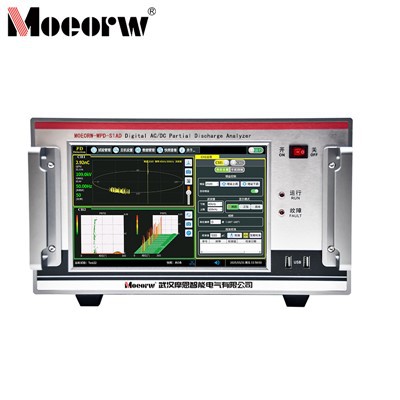
If you’re curious about whether your current oil test equipment can handle fuel oils, or if you’re looking to set up a testing lab that can do both, I’m here to help. We work with everyone from small independent shops to large industrial fleets, and we can walk you through what adaptations will work for your specific tests, no jargon, no pressure. Just reach out to start a conversation about your needs.
High Voltage Divider References:
- ASTM International. (2021). Standard Test Method for Kinematic Viscosity of Transparent and Opaque Liquids (and Calculation of Dynamic Viscosity). ASTM D445.
- ASTM International. (2022). Standard Test Method for Particle Counting in Fuids by Light Extinction. ASTM D6226.
- International Organization for Standardization. (2020). Petroleum Products – Determination of Water – Karl Fischer Method. ISO 3733.
- Society of Tribologists and Lubrication Engineers. (2019). Cross-Application of Lubricant Testing Equipment for Fuel Analysis. STLE Technical Paper No. TP-2019-001.
Wuhan Moen Intelligent Electric Co., Ltd.
As one of the most professional oil test equipment manufacturers in China, we’re featured by quality products and good price. Please rest assured to buy high quality oil test equipment in stock here and get quotation from our factory. Customized orders are welcome.
Address: Building A, No.1, Fenghuangyuan 2nd Road, Donghu New Technology Development Zone, Wuhan, Hubei, China
E-mail: info@hvhipotsystem.com
WebSite: https://www.hvhipotsystem.com/
