If you’re running a facility that relies on dewatering centrifuges to separate solids from liquids—whether for municipal wastewater treatment, food processing, mining, or industrial sludge handling—you already know these machines are workhorses. But here’s something I’ve learned after 12 years selling, installing, and supporting dewatering centrifuges: the difference between a centrifuge that runs flawlessly for 10,000 operating hours and one that breaks down every 500 hours isn’t just build quality—it’s the maintenance records you keep. Dewatering Centrifuge
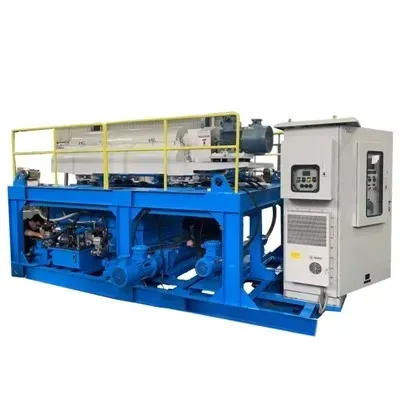
As a supplier, I don’t just sell equipment; I help operators avoid costly downtime. Over the years, I’ve seen too many clients discard loose receipts or scribbled notes about filter changes or bearing replacements, only to panic when their centrifuge seizes mid-shift and they’re waiting two weeks for a critical spare part. Good maintenance records aren’t just a regulatory box to tick—they’re your machine’s digital and paper trail, revealing patterns, catching small issues before they become disasters, and keeping your operations on track.
Today, I’m breaking down exactly what maintenance records you need to keep, why each matters, and how to track them like a pro. No fluff, just the real-world insight I’ve gained working hands-on with dewatering centrifuges of all sizes.
Core Operational Log: The Foundation of Your Records
Let’s start with the basics: you can’t manage what you don’t measure, and a core operational log is the backbone of every centrifuge’s record-keeping. This isn’t a fancy document—it’s a running log that you update every single time the machine runs. What goes in here?
- Daily operating parameters: Feed rate (gallons per minute or tons per hour), feed solids concentration (percentage by weight), centrate clarity (we’re talking turbidity readings here, not just “looks clear”), basket speed (RPM), and discharge cake dryness. I can’t tell you how often a 2% drop in cake dryness—something that would normally be written off as “normal wear”—ends up being a sign of a worn scroll conveyor. If you track this daily, you’ll spot that dip three days in a row instead of ignoring it for a month, when it’s already costing you $5,000 in wasted material.
- Shift changes and unplanned stops: Every time the centrifuge shuts down unexpectedly, write down why. Was it a power surge? A clogged discharge? A foreign object (like a plastic cap or metal scrap) that got pulled into the feed? Early in my career, a mining client of mine had a centrifuge that kept shutting down, and we spent three days troubleshooting until we realized a broken impeller was causing a blockage. If their log had noted that every “random” shutdown happened at the same time of day, we would’ve caught it in 10 minutes.
- Routine start-up and shut-down checks: What did you do before hitting “go”? Did you check oil levels? Purge the feed line? Test the emergency stop button? These small checks are non-negotiable, and logging them means you can replicate a successful start-up after a long weekend without guessing what worked last time.
Preventive Maintenance Schedules: The Planned Work That Saves You Money
Preventive maintenance (PM) isn’t “fixing things before they break”—it’s following a manufacturer-recommended schedule to replace parts that wear out predictably. For a dewatering centrifuge, the PM tasks are specific, and you need a separate log to track when each was done, who did it, and what parts were used.
- Bearings: Centrifuge bearings take a beating—they rotate at high speeds while carrying heavy loads, often in wet, corrosive environments. Most manufacturers recommend checking bearing grease levels every 50 operating hours and replacing the bearings every 10,000 hours. I always tell clients to log every grease top-up, because over-greasing can be just as bad as under-greasing—it causes heat buildup and shortens bearing life. A few years back, a food processing client skipped logging their grease changes, and their bearing seized because they’d been adding too much; replacing it cost $8,000 and a 3-day shutdown, which would’ve been covered by simple log-keeping.
- Scroll conveyor and bowl wear parts: The scroll (the part that moves solids up the bowl) and bowl liner are prone to abrasion from sludge, solids, or minerals. Depending on the material, these parts can last 2,000 to 10,000 hours. Your log should include measurements of scroll tip thickness and bowl liner wear at every PM. If you notice the scroll is wearing unevenly, that’s a sign of a misalignment—and if you ignore it, the liner can crack, leading to catastrophic damage to the bowl. I once had a municipal client whose bowl liner cracked, and the repair required replacing the entire bowl, a $25,000 job, all because they didn’t track scroll wear.
- Hydraulic and electrical components: Many modern centrifuges use hydraulics to adjust bowl speed or discharge cake, and electrical panels control motor speed and safety features. Log hydraulic fluid changes (usually every 2,000 hours), filter replacements, and electrical inspections (every 12 months). Old hydraulic fluid can get contaminated with sludge, leading to slow or unresponsive bowl adjustments—something that ruins cake dryness and increases energy use.
- Filter and seal replacements: Mechanical seals prevent leakage between the bowl and the stationary parts, and air/oil filters keep contaminants out of hydraulic systems. Log every seal replacement, including the part number of the seal used, because not all seals are created equal. Using a cheap, non-compatible seal can lead to leaks within 100 hours, while a quality replacement from a trusted supplier can last 2,000+ hours.
Corrective Maintenance Records: Fixing What Breaks (And Learning From It)
No machine is perfect, so you’ll have unplanned repairs. The key is to log every one of these, not just a quick note that “we fixed it.” Here’s what to include in a corrective maintenance log:
- Date and time of the failure: Timing matters. If a failure happens every time the centrifuge runs at full load, that’s different from a random failure on low load.
- Symptoms and root cause: Did the centrifuge make a grinding noise? Did centrate become cloudy? Did the motor trip? Don’t just write “bearing failure”—dig deeper. Was it due to improper lubrication? Misalignment? Excessive vibration? I once worked with a paper mill that had a bearing fail every 6 months, and after reviewing their logs, we found that their feed contained high levels of metal shavings from the pulping process—contaminants that were wearing out the bearings faster. Switching to a sealed, contaminant-resistant bearing fixed the issue.
- Repairs made and parts used: If you replaced a bearing, write the part number, supplier, and installation date. If you realigned the bowl, log the alignment readings before and after. This helps you track if a repair was successful—and if the same issue comes back, you know to look elsewhere.
- Downtime impact: How long was the centrifuge down? How much did it cost in lost production or emergency repairs? This is important for budgeting and showing leadership why investing in better record-keeping (and a higher-quality centrifuge, for that matter) pays off.
Compliance and Regulatory Records: The Paper Trail For Audits
If you’re in a regulated industry—wastewater treatment, mining, food processing—you’ll need to prove your centrifuge is operating within environmental and safety standards. Missing records here can lead to fines, so don’t skip this part:
- Effluent testing results: Many facilities are required to test centrate (the liquid that comes out of the centrifuge) for solids, pH, and other contaminants. Log every test result, the date, and who conducted it. If a test fails, you’ll have the operational and maintenance logs to trace why—was the scroll worn? Feed solids concentration too high?
- Safety inspections: Centrifuges have safety features like emergency stops, guardrails, and pressure relief valves. Log monthly safety checks and annual third-party inspections. Last year, a manufacturing plant got a $12,000 OSHA fine because their emergency stop button was broken, and they had no log showing they’d checked it in the past 6 months. A simple log entry would’ve avoided that.
- Spare parts inventory and replacement logs: Keeping track of spare parts isn’t just for repairs—it’s for compliance. If you use a specific type of seal or filter, you need to show that the parts used in maintenance are compatible with your centrifuge and meet regulatory requirements.
How I Help Clients Stay On Top Of Their Records
Over the years, I’ve seen operators struggle with record-keeping—they’re busy running the facility, and paperwork falls by the wayside. That’s why I work with every client to set up a simple system, whether it’s a digital spreadsheet, a cloud-based tool, or a physical binder. I also provide custom checklists for each centrifuge model we sell, so they know exactly what to log and when. For example, if you have a decanter centrifuge for municipal sludge, my team will give you a tailored log that includes sludge-specific parameters, like volatile solids content.
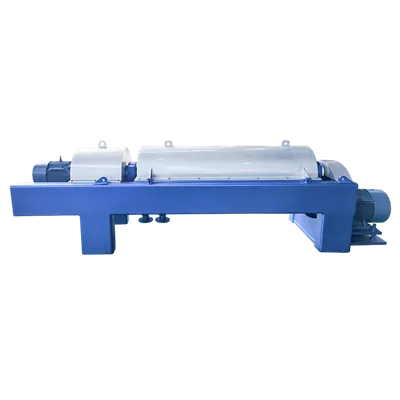
And here’s the thing: good records don’t just save you from fines or downtime. They extend the life of your centrifuge. I had a client who kept meticulous logs for 8 years on a centrifuge we sold, and when they decided to upgrade, they sold it for 30% more than a comparable machine because the buyer could see the machine was well-maintained. That’s ROI right there.
Decanter Centrifuge At the end of the day, your dewatering centrifuge is only as reliable as the care you take of it—and part of that care is documenting every step. If you’re not sure where to start, or if you have a centrifuge that’s been giving you headaches, reach out to discuss your needs.
References
- American Water Works Association. (2020). Operation and Maintenance of Industrial Centrifuges for Sludge Dewatering. AWWA Press.
- Centrifuge Manufacturers Association. (2021). Recommended Maintenance Protocols for Decanter Centrifuges. CMA Technical Bulletin 2021-03.
- Occupational Safety and Health Administration. (2022). Machine Guarding Requirements for Industrial Process Equipment. OSHA 3120.
- Food and Drug Administration. (2021). Equipment Maintenance Records for Food Processing Machinery. FDA Compliance Guide for Centrifuge Operators.
- International Organization for Standardization. (2019). Centrifuge Performance and Maintenance Standards (ISO 10282:2019). ISO Press.
Lishui Yuanrong Environmental Protection Equipment Co., Ltd.
As one of the most professional dewatering centrifuge manufacturers and suppliers in China, we have world-leading production equipment and strong manufacturing capabilities. Please feel free to buy customized dewatering centrifuge from our factory. Also, quotation is available.
Address: Lot 6-1, Block 15, Wanyang Zongchuang City, Lishui, Zhejiang, China
E-mail: 361184920@qq.com
WebSite: https://www.yrhdc.com/
