Hey there! Let’s cut to the chase—if you’re in the paint industry, you’ve probably spent way too much time dealing with wet paint headaches: unstable pigment suspensions, batch-to-batch inconsistencies, storage issues that turn good paint into goop, and shipping costs that make you want to scream. If that’s you, let me introduce how spray dryers (the ones we supply, obvi) are game-changers here, not just some random industrial machine. Spray Dryer
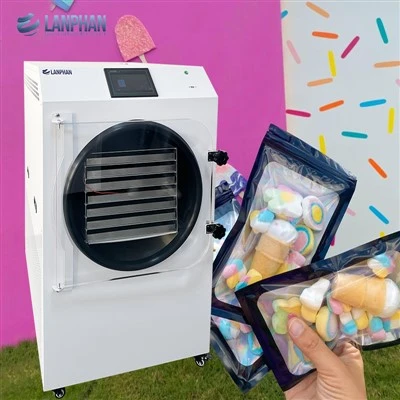
First, let’s get the basics right for the uninitiated. A spray dryer doesn’t sound all sexy, but its job is super straightforward: you pump a liquid (in this case, a paint slurry, emulsion, or dispersion) through a tiny nozzle to turn it into a mist of droplets, blast hot air at it to evaporate the water or solvent, and boom—you’re left with a free-flowing powder. No weird residues, no clumps, just consistent granules. Now, why does that matter for paint? Let’s break down the actual uses, not just the tech jargon.
First up—pigment production. Pigments are the color backbone of paint, right? Wet pigments (like titanium dioxide, iron oxides, or those fancy specialty ones) are often made as a water-based slurry, which is a pain to ship. Carriers don’t want to move water-heavy stuff—too expensive, too easy to leak, too much storage space. Spray dryers turn that slurry into pigment powder. Wait, but not just any powder—because when we set the spray dryer’s temp, nozzle size, and air flow, we control how fine the granules are. Fine granules mean they mix way better into paint bases, no settling out mid-storage. I’ve had paint manufacturers tell me before they used to get shipments of wet pigment that would separate in a week, leading to messy, uneven mixing lines. With spray-dried pigment? They store it in silos for months, pull it out when needed, and it flows like salt—no clumping, no settling. That cuts their mixing time by 30% minimum. We’re talking real numbers here, not marketing fluff.
Then there’s paint resin and binder systems. Binders are the stuff that holds pigment to the wall, right? A lot of modern paint is water-based because regulations are cracking down on volatile organic compounds (VOCs)—no one wants that fumes in their factory or customers’ homes. But water-based resin emulsions are tricky: they’re sticky, go bad fast, and shipping them is heavy. Spray dryers turn liquid resin emulsions into free-flowing powder binders. Wait, powder binders? Yeah, that’s a big one for low-VOC and zero-VOC paints. When you mix spray-dried binder powder with spray-dried pigment, you don’t have to handle big drums of liquid—you just pour the two powders into the mixing tank, add water (or a tiny amount of solvent), and boom—paint base. No more dealing with leaky liquid drums, no more VOCs from solvent carriers. We’ve had clients use this to cut their VOC levels by 40% without sacrificing paint durability. That’s not nothing for complying with global environmental rules.
Next, powder coatings—wait, hold on, is powder coating the same as powder paint? Kinda, but they’re super related, and spray dryers are key here. Powder coatings are the dry finish you see on metal furniture, appliances, even car parts. You can’t make powder coatings without spray dryers, let’s be real. The process is: mix pigment, binder, additives, and a tiny bit of solvent into a slurry, then spray dry it into powder coating granules. The spray dryer controls the particle size distribution here—too big, and the powder doesn’t apply evenly with an electrostatic gun; too small, and it blows away. We tune our dryers to get that perfect 20-50 micron range, which is exactly what powder coating manufacturers need. I had a client that used to make powder coatings with a different process that had 15% scrap from bad particle size—after switching to our spray dryers? Scrap dropped to under 3%. That’s a huge cost save for them.
Wait, let’s not forget functional additives. Paint isn’t just color and binder—there’s anti-settling agents, UV stabilizers, mold inhibitors, rust preventives. A lot of these are liquid additives, which can mess with the paint’s consistency if added at the wrong time. Spray drying these additives into powder form means they’re easy to mix in with the pigment and binder powders, so they distribute evenly. No more clumps of mold inhibitor that cause spots on dried paint, no more UV stabilizers separating in storage. We once worked with a client that made exterior house paint—they were having issues with mold growing on the wet paint in storage barrels, which ruined whole batches. They spray dried their mold inhibitor into a fine powder and added it with the other powders, and the storage mold issue disappeared overnight. That’s a problem we solved with a machine, and that’s way better than just telling them to “store barrels colder.”
Now, let’s talk about the real wins that paint manufacturers care about: efficiency and consistency. Paint batches used to be a “hope for the best” thing back in the day—one batch might be too thick, another too thin, color might shift because the pigment separation was off. Spray dryers take liquid feed (which we can adjust in real-time) and turn it into a powder with super consistent particle size and composition. That means every batch of paint you make from that powder is the same. No more testing 5 different batches before a big order, no more customer returns because the color is off. One of our regular clients told us their customer return rate for color inconsistencies dropped by 25% after they started using our spray dryers for pigment. That’s not just good for them—it’s good for their customers, who are happy with the paint they buy.
Wait, but let’s address the elephant in the room: isn’t spray drying expensive? Yeah, upfront costs are a thing, but let’s do the math. If you’re spending $10k a month shipping wet pigment, storage for wet materials, and dealing with scrap batches, a spray dryer pays for itself in 12-18 months. We’ve seen that over and over. Also, our spray dryers are built for the paint industry—we don’t do random industrial dryers; we tune the inlet/outlet temps, the nozzle pressure, and the powder collection system specifically for paint slurries. No getting a generic dryer that clogs with pigment or breaks down from sticky resins. We also offer maintenance plans that are tailored, so your dryer doesn’t turn into a paperweight.
Another thing: sustainability. Everyone’s talking about green manufacturing now, and spray dryers help with that. First, you cut down on VOCs because you’re using powder materials instead of liquid solvents. Second, the powder has a longer shelf life—less waste from expired paint or pigment. Third, our dryers have heat recovery systems—we reuse the hot air that’s evaporated from the slurry to preheat incoming air, cutting energy costs by 20-30%. That’s a big one for factories that run 24/7. A paint factory’s energy bill is huge, so any way to cut that is a win.
Wait, let’s get specific about a use case I know well. Let’s say a mid-sized paint company that makes interior and exterior latex paint. Before they used our spray dryer, they bought pigment as wet cake (that’s the thick, wet sludge you get after filtering pigment slurry) for $1.20 per kg. Shipping was $0.50 per kg because of the water weight. Storage required insulated tanks to keep the pigment from separating, and they threw away 8% of the wet cake every month because of clumps and settling. After switching to spray-dried pigment from our machine, they buy pigment slurry, spray dry it on-site, so no shipping water—pigment cost dropped to $0.90 per kg, no waste from clumps, and their mixing line throughput went up 25%. That’s not a vague benefit; that’s concrete cash saved.
But here’s the thing—spray drying isn’t a one-size-fits-all. You can’t use the same dryer for a thin resin emulsion as you would for a thick pigment slurry. That’s why we work with you to test your specific paint formulations. We have small-scale test dryers you can send your slurry to, so you can see for yourself how the powder turns out, what the particle size is, and if it works for your process. No guessing—we’ll let you run tests with your own materials before you commit. That’s how we do business, no nonsense.
Now, let’s be real—there are some pain points with spray drying for paint, right? Clogged nozzles if the slurry isn’t filtered right, powder that’s too fine (blows into the air) or too coarse (doesn’t mix well). But we design our spray dryers with anti-clog nozzle systems and powder collection cyclones that catch 99% of the powder, so you don’t lose product to the air. We also give you a quick-start guide that’s specific to paint, so your team doesn’t have to be a dryer expert to run it. I’ve had clients tell me they had a new operator up and running in 2 days, which is way faster than training for other industrial equipment.
At the end of the day, the paint industry’s biggest challenges are consistency, efficiency, and meeting environmental rules. Spray dryers solve all three. They turn messy, heavy, wasteful liquid materials into compact, stable powders that are easy to store, ship, and mix. They cut down on waste, lower VOCs, and make every batch of paint the same as the last.
If you’re a paint manufacturer tired of dealing with wet pigment headaches, batch inconsistencies, high shipping costs, or scrap batches, let’s talk. We don’t do sales pitches—we’ve worked with dozens of paint companies, so we know your pain points. We can set up a test with your own materials, walk you through how our spray dryer would fit your line, and even help with installation and training. Don’t keep wasting money on processes that cause you headaches—let’s make your paint production smoother, cheaper, and more consistent.

Wait, before I go—just a quick note: this isn’t some overhyped new tech. Spray dryers have been used in paint for decades, but recent tweaks (better energy efficiency, more precise controls) have made them way more useful than ever. We take that proven tech and tailor it specifically to paint, so you get a machine that works for your business, not against it. If you’re ready to stop dealing with wet paint mess and start making paint that’s consistent, clean, and profitable, reach out. We can’t wait to hear about your specific challenges and show you how we can help.
Autoclave Reference:
- Kutz, M. (Ed.). (2013). Handbook of Powder Technology. Wiley.
- Paint and Coatings Industry Association. (2021). Sustainable Manufacturing Practices for Powder Coatings.
- Journal of Applied Polymer Science. (2019). “Spray Drying of Water-Based Resins for Low-VOC Paints.”
Henan Lanphan Technology Co., Ltd.
We’re well-known as one of the leading spray dryer manufacturers and suppliers in China. With abundant experience, we warmly welcome you to buy high quality spray dryer for sale here from our factory. For price consultation, contact us.
Address: Room 801, East Tower, Xiyuan Square, Zhongyuan District, Zhengzhou City, Henan Province
E-mail: lanphantech@lanphan.com
WebSite: https://www.lanphantech.com/
